What is Virtual Reality? All You Need To Know
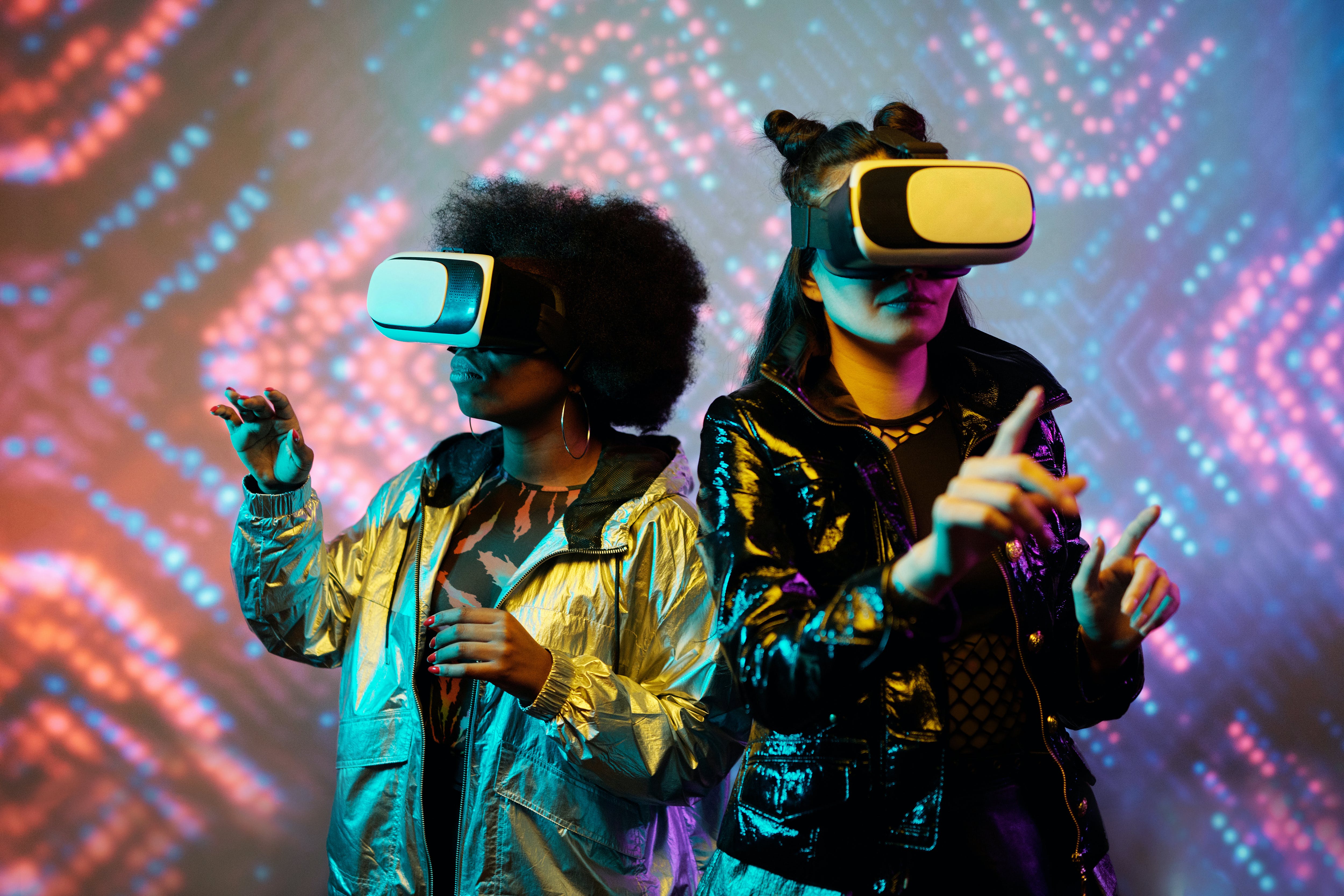
Virtual Reality - the technology of the future. When we talk about Virtual Reality (VR), many of us think of science fiction films. However, the truth is that nowadays, this technology completely blends in with our daily lives.
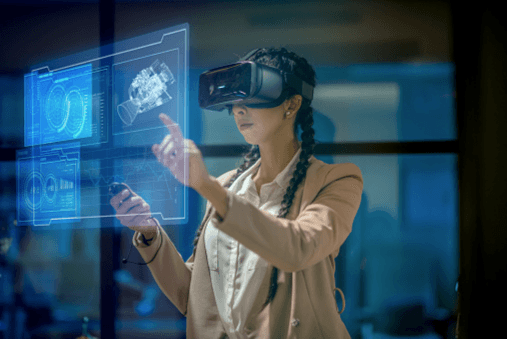 Source: Unsplash
1. What Is Virtual Reality?
Virtual Reality (VR) uses computer technology to create a simulated environment that can be explored in 360 degrees. Unlike traditional user interfaces, users have an immersed experience and the ability to interact with 3D worlds. By simulating as many senses as possible, such as vision, hearing, touch, and even smell.
Virtual Reality is a fantastic way to travel using nothing more than the power of technology. With a headset and motion tracking, VR lets you look around a virtual space as if you're actually there or play a game as though you're in it.
Virtual Reality is amongst the technologies that have existed as early as the 1960s. Today it is making a comeback into many forms of our daily lives - this high-end simulated experience created by digital hardware and software to provide real-world experience.
Headsets and glasses are used for visual immersion, while handhelds and wearables offer tactile sensations. Many leading brands, like Microsoft, Sony, Intel, are already deploying VR to power their digital marketing efforts.
2. The technology used in Virtual Reality
Through VR, a virtual world is created that viewers can enter and walk through and handle virtual objects. The ability to enter and walk through the virtual world and handle virtual objects using hand gestures makes VR interactive, one of its most essential features.
The goal of VR is to provide human beings with a virtual environment where we can interact with a computer just as we do in the real world, that is, by talking with a virtual human in a spoken language, by writing a letter, or by drawing a picture. We can grasp a virtual object by hand gesture and bring it to another place.
Virtual Reality's most immediately recognizable component is the head-mounted display (HMD). In a human-friendly virtual environment, we can interact with a computer without any difficulties or barriers. When a virtual landscape is generated by VR technology, we can go there just as if it were a natural landscape. Providing a 3D image of the landscape and sound and smell helps us enjoy the scenery.
Moreover, Audio plays a crucial role in VR. Convincing Virtual Reality applications requires more than just graphics. Both hearing and vision are central to a person's sense of space. To create truly immersive Virtual Reality experiences, accurate environmental sounds and spatial characteristics are a must.
With a diversity of emerging hardware and software options, the future of wearables is unfolding but yet unknown. Concepts such as the HTC Vive Pro Eye, Oculus Quest, and Playstation VR are leading the way. Still, players like Google, Apple, Samsung, Lenovo, and others may surprise the industry with new levels of immersion and usability.
3. Pros and cons of Virtual Reality
3.1 Pros
3.1.1 Creating Convenience
VR creates convenience for you in any activity. For example, when you go furniture shopping and see the dining room table of your dreams, you are wondering how it will look inside your dining room. You can use virtual Reality to arrange the furniture into an approximate place in your house.
3.1.2 Exciting and Engaging
Instead of a traditional training program, VR is an engaging technology that learners are likely to remember. VR training helps to capture and hold learners' attention, leading to higher knowledge retention rates.
Virtual Reality has made watching more enjoyable than reading. It creates enjoyable experiences and motivates the students to learn and know better in life.
3.1.3 Provide Training Environments
One of the benefits of Virtual Reality is that it can simulate a dangerous environment for training purposes or create a safe learning environment.
For instance, firefighters can apply the skills they learned in a controlled environment before extinguishing a real fire, or a pilot can have an extended practice flying a virtual aircraft before flying the real thing and many other uses or in other fields such as healthcare, education, military.
3.1.4 No More Language Barriers
The language barrier is a significant problem in the field of education. If you are not studying in your hometown, you need to adopt the dialect of the place where you are considering. With the implementation of Virtual Reality, the possible language can be implemented by using suitable software.
3.2 Cons
3.2.1 Getting Addicted
If someone spends an extended period in a virtual environment, they may become addicted to it. It is hazardous with social networking since you can create your avatars and meet other users online.
Besides, people can do many illegal activities in the virtual world, like getting addicted to video games or harmful drugs.
3.2.2 High Cost
VR solutions can have higher costs than other solutions, which can also make scalability difficult. Between the hardware and software that VR training requires, programs can cost from $20,000 up to $150,000 or more.
3.2.3 Health Effects
Some people can experience physical side effects when using VR. Common symptoms include headaches, nausea, eyestrain, even loss of spatial awareness, dizziness, disorientation, and nausea.
You must take steps to ensure your VR training is safe through content design and preparing alternative formats.
3.2.4 Loss of human connections
There is no more scope for positive interaction with the virtual reality headset because people rely more on virtual Reality for social interactions than in real life.
As a consequence, this can ultimately lead to depression and disassociation from real-life social.
4. What's the Difference Between Virtual Reality (VR) and Augmented Reality (AR)?
Virtual Reality and Augmented Reality are two sides of the same coin. While VR is about immersing you in an entirely virtual world, viewed through a screen in your headset, AR is a technology that lets people superimpose digital content (images, sounds, text) over a real-world environment.
Augmented Reality simulates artificial objects in the natural environment; Virtual Reality creates an artificial environment to inhabit.
4.1 Virtual Reality
VR replaces Reality, taking you somewhere else. It immerses users, allowing them to "inhabit" an entirely different environment altogether, notably, a virtual one created and rendered by computers. It uses VR headsets or closed head-mounted displays (HMDS) to insulate and transpose the user to an alternative world completely.
In Virtual Reality, the computer uses similar sensors and math. However, rather than locating a real camera within a physical environment, the position of the user's eyes is located within the simulated environment. If the user's head turns, the graphics react accordingly. Rather than compositing virtual objects and a real scene, VR technology creates a convincing, interactive world for the user.
4.2 Augmented Reality
AR uses the existing real-world environment and puts virtual information on top of it to enhance the experience. It adds to Reality, projecting information on top of what you're already seeing.
In Augmented Reality, the computer uses sensors and algorithms to determine the position and orientation. AR technology then renders the 3D graphics as they would appear from the camera's viewpoint, superimposing the computer-generated images over a user's view of the real world.
The distinctions between VR and AR come down to the devices they require and the experience itself:
- AR uses a real-world setting while VR is completely virtual.
- AR users can control their presence in the real world; the system controls VR users.
- VR requires a headset device, but AR can be accessed with a smartphone.
- AR enhances both the virtual and real-world while VR only enhances a fictional reality.
5. Applications of Virtual Reality
Medicine, culture, education, and architecture are areas that have already taken advantage of this technology. From guided museum visits to the dissection of a muscle, VR allows us to cross boundaries that would otherwise be unimaginable.
5.1 VR in Tourism
VR technology offers the ability to put you in places you're unlikely to visit in the flesh, whether too expensive, too dangerous, out of bounds because of mobility issues, or just because you don't like flying.
5.2 VR in Healthcare
VR helps to train medical students, enabling them to experience operations from the surgeon's perspective. Surgeons can train with virtual tools and virtual patients and transfer their virtual skills into the operating room, and studies have already begun to show that such training leads to faster doctors who make fewer mistakes.
Virtual reality technology can provide a safe environment for patients to contact things they fear while remaining in a controlled and safe environment.
5.3 VR in Education
Students can interact with each other and within a 3D environment. They can also be taken on virtual field trips, such as museums, tours of the solar system, and going back in time to different eras. Virtual Reality can be particularly beneficial for students with special needs, such as autism.
VR allows students to explore, experience, and become immersed in virtual environments. There are two ways Virtual Reality can be used in the classroom: a student explores a virtual environment using a computer, keyboard, and mouse, or a student explores using some input device, e.g., controller, virtual reality headset. The latter set-up fully immerses students using a head-mounted display (HMD).
5.4 VR in Sport
Coaches and players can use Virtual Reality to train more efficiently across a range of sports, as they can watch and experience certain situations repeatedly and improve each time. Essentially, it's used as a training aid to help measure athletic performance and analyze techniques.
VR has also been used to enhance the viewer's experience of a sporting event. Broadcasters are now streaming live games in virtual Reality and preparing to one day sell virtual tickets to live games so that anyone from anywhere in the world can 'attend' any sports event.
5.5 VR in Entertainment
People can immerse in a 3D virtual reality entertainment environment and interact with each other during a game. More importantly, the social aspect of gaming has become an integral part of a game that transformed it into a place where people can hang out in chat rooms.
5.6 VR in Real Estate
By putting on a virtual reality headset, you can both observe the existing location and see how your property will look in the future when it's done. The property could be located in another country, but you can still get a tour without leaving your apartment. A virtual room tour can encourage buyers to make a favorable decision and invest.
5.7 VR in Military
VR proves an effective method of training. It can transport a trainee into a number of different situations, places, and environments for a range of training purposes. The military uses it for flight simulations, battlefield simulations, medic training, vehicle simulation, and virtual boot camp, among other things.
VR is an entirely immersive, visual, and sound-based experience, which can safely replicate dangerous training situations to prepare and train soldiers without putting them at risk until they are ready for combat.
An important area of application for VR systems has constantly been training for real-life activities. It reduced the cost to provide training equal or nearly equal to practice with natural systems with more excellent safety.
6. The Future of Virtual Reality
Being a part of this technology is beneficial for businesses and customers. Now, everyone has the opportunity to experience innovative technology at its best, and there will be even more opportunities in the future of VR. Virtual Reality is one of the technologies with the highest projected potential for growth.
According to the latest forecasts from IDC Research (2018), investment in VR and AR will multiply 21-fold over the next four years, reaching 15.5 billion euros by 2022. In addition, both technologies will be critical to companies' digital transformation plans, and their spending in this area will exceed that of the consumer sector by 2019.
Nowadays, the market is demanding applications that go beyond leisure, tourism, or marketing and are more affordable for users. To successfully conquer the challenges of building out augmented and virtual reality technologies while keeping up with market expectations and time-to-market, companies may want to consider partnering with experienced vendors who can provide end-to-end product development with comprehensive engineering capabilities.
Almost 90% of companies already expect vendors to help meet AR/VR requirements - from developing plans to full manufacturing capabilities. By leveraging outside talent and virtual and augmented reality technology, companies can focus on their core strengths while also delivering an out-of-this-world, immersive experience.
All this means that Virtual Reality is no longer science fiction. It is integrated into our present and, in the coming years, it will lead to advances that will shape the future.